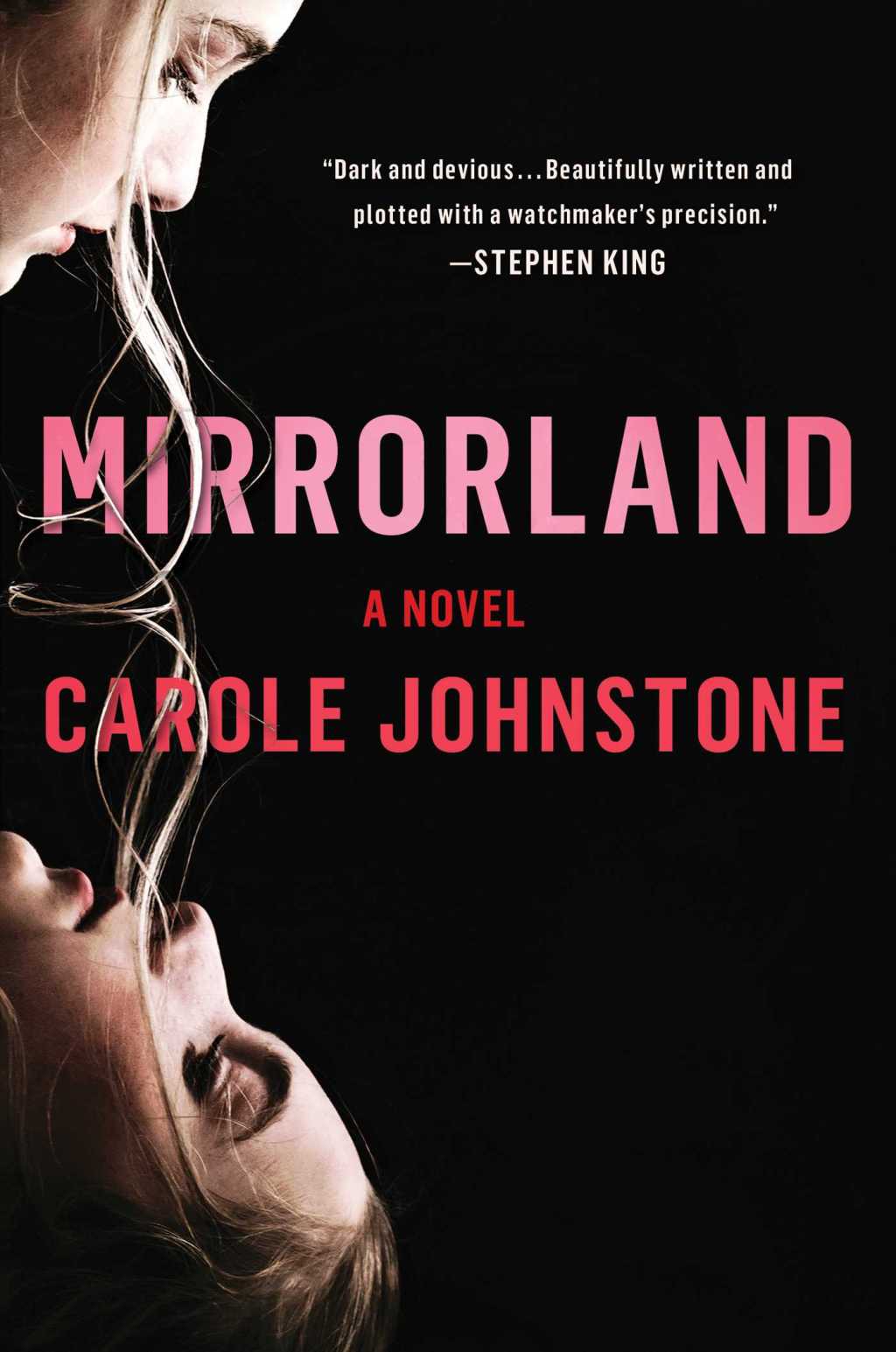
Mirrorland
Author: Carole Johnstone
Genre: Psychological Thriller
320 pages
Publisher: Schribner
Synopsis
Cat lives in Los Angeles, far away from 36 Westeryk Road, the imposing gothic house in Edinburgh where she and her estranged twin sister, El, grew up. As girls, they invented Mirrorland, a dark, imaginary place under the pantry stairs full of pirates, witches, and clowns. These days Cat rarely thinks about their childhood home, or the fact that El now lives there with her husband Ross.
But when El mysteriously disappears after going out on her sailboat, Cat is forced to return to 36 Westeryk Road, which has scarcely changed in twenty years. The grand old house is still full of shadowy corners, and at every turn Cat finds herself stumbling on long-held secrets and terrifying ghosts from the past. Because someone—El?—has left Cat clues in almost every room: a treasure hunt that leads right back to Mirrorland, where she knows the truth lies crouched and waiting…
A twisty, dark, and brilliantly crafted thriller about love and betrayal, redemption and revenge, Mirrorland is a propulsive, page-turning debut about the power of imagination and the price of freedom.
My review
Mirrorland by Carole Johnstone is a creepy, gothic psychological thriller that blurs the lines between thriller and fantasy. The premise itself isn’t necessarily new, but I found the execution creative and compelling, especially because of the strange, magical world of Mirrorland that twin sisters Cat and El invented as children. Johnstone’s use of Mirrorland to explore childhood trauma, grief, sisterhood, and the ways we reshape reality to survive difficult experiences makes this a more unique read in the thriller genre.
I don’t read a lot of fantasy, but the fantasy elements play a huge role in this story and elevate the book beyond what could otherwise be a fairly familiar psychological thriller. Through flashbacks, we see how the girls’ elaborate make-believe games were actually a reflection of the reality they were living in. As the story unfolds, the lines between what is real and what isn’t become increasingly blurry, creating a growing sense of tension and paranoia.
One of the best parts of the story was watching Cat search through her old home, following the clues that someone has left behind for her to find. Piece by piece, she starts to uncover what may have happened to her sister. It’s a fun narrative device, and there’s always the possibility that what Cat is uncovering, or how she’s interpreting it, might not be entirely reliable.
There are two mysteries unfolding at once. Cat is trying to figure out what happened to El, while we’re simultaneously piecing together what happened to the girls during their childhood. Their basement world of Mirrorland becomes a twisted coping mechanism for everything happening upstairs, and I thought that was one of the most inventive aspects of the story. The fact that adult El has returned to the childhood home and that Cat now has to return there to search for her makes the whole setting feel haunted by the sisters’ past. And then there’s Ross, the boy they both loved as kids, who grew up to marry El. There are a lot of complicated relationships and buried secrets at play.
The first three-quarters of the book worked especially well for me. I loved the slow drip of clues, the flashbacks, and the way the fantastical elements gradually intertwined with reality. There were some genuinely surprising reveals, and a few of the twists completely caught me off guard.
Unfortunately, that’s also where some of my issues with the book came in. A couple of the bigger reveals, one in particular that I don’t want to spoil, require a lot of suspension of disbelief and some serious plot gymnastics. By the time we reached that reveal, it felt so far out of left field and the narrative turned into more of a tell. It was a pretty dramatic shift from the earlier parts of the novel. The most compelling part of the story was following the clues El left behind, slowly unraveling the mysteries of the past, and watching the boundaries between fantasy and reality become increasingly blurred. The ending, by comparison, felt much more like a long explanation than the creepy, atmospheric, almost dreamlike storytelling that had made the first three-quarters so engaging.
Mirrorland is an inventive and creative take on a familiar psychological thriller premise, with a creepy atmosphere and a genuinely interesting use of fantasy. Even though the ending was a let down, it’s definitely worth the read.
My recommendation: worth the read!


I look forward to your comments! Note that comments are moderated and you will get a notification when they are approved.